المشاركات

The virgin and child

صورة
The sculpture "The Virgin and Child" carved by the Italian sculptor Pietro Canonica in 1918 showcases his remarkable ability to blend realism with spiritual expression. In this artwork, the focus on detail is evident, from the folds of the clothing to the facial expressions, reflecting his artistic precision and influence from classical art and the Renaissance.

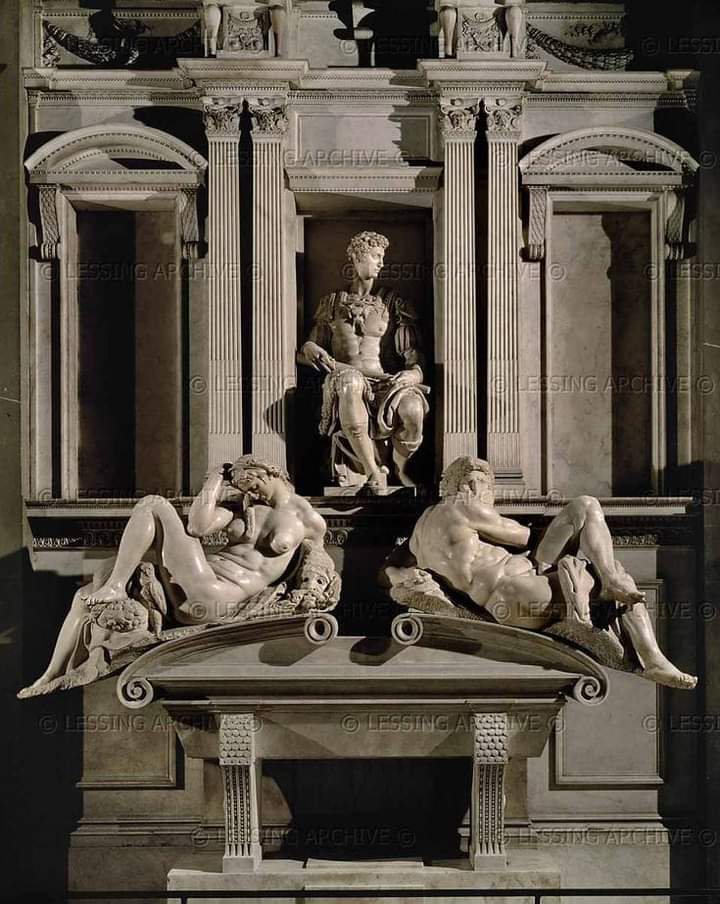
The tomb of Giuliano de ' Medici '

صورة
The tomb of Giuliano de' Medici is one of the timeless masterpieces created by Michelangelo in Florence, with a replica housed in the Pushkin Museum in Moscow. The tomb portrays Giuliano de' Medici with features exuding strength and serenity, depicted seated on a throne. Surrounding him are statues representing Night and Day, symbolizing the cycle of life and the passage of time. The subtle contrast between expressions of power and gentleness gives the work a philosophical depth, captivating all who encounter it.

Allegory of peace and war

صورة
This painting is known as "Allegory of Peace and War" by the Italian artist Pompeo Batoni, painted in the 18th century. The artist personifies peace as a feminine, gentle, and delicate figure, while war is depicted as a strong male figure. The interaction between the two characters seems to aim at illustrating the complex relationship between peace and war. The figure of peace attempts to dissuade war from conflict, holding his hand in a way that conveys her desire to guide him towards calmness. Meanwhile, the figure of war does not adopt a hostile stance towards the woman representing peace. Instead, he holds the shield in a manner that appears to protect her. This detail suggests a profound symbolism, portraying a balance between war and peace, as though war is willing to safeguard peace despite its strength and impulsiveness. This interpretation could reflect the idea that war, despite its violent nature, can sometimes be necessary to defend and preserve peace.

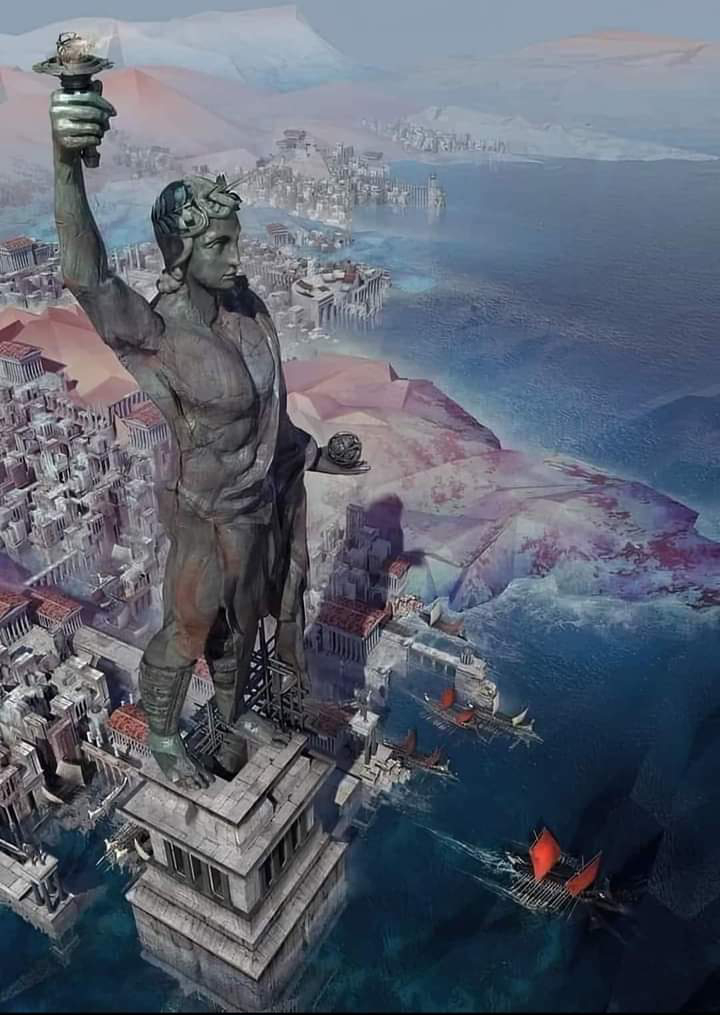
The Colossus of Rhodes

صورة
The Colossus of Rhodes is one of the Seven Wonders of the Ancient World. It was a massive statue of the god Helios, the sun god in Greek mythology, believed to have been built in the Greek city of Rhodes around 292 BC. It is thought to have stood about 33 meters tall, making it one of the largest statues in ancient history. The colossal statue was made of bronze and iron and stood at the entrance of the Rhodes harbor as a symbol of strength and prestige. Unfortunately, the statue was destroyed only 56 years after its construction due to a powerful earthquake.

Sapho

صورة
This sculpture, "Sapho", is a masterpiece by James Pradier, created in 1852 and housed in the Musée d'Orsay in Paris. The sculpture depicts Sappho, the renowned Greek poetess from the island of Lesbos, who is one of the most significant figures in ancient Greek literature. She was known for her emotional and delicate poetry, often centered on love and human relationships. In this artwork, Sappho appears in a sorrowful pose, seated on a rock, holding her foot, while her musical instrument (a lyre) lies discarded beside her. This detail seems to symbolize the end of creativity or profound sadness. The scene is thought to represent her suffering from unrequited love or loneliness, aligning with the legend that she leapt into the sea from a cliff due to her broken heart.

Juno asking Venus for her girdle

صورة
The painting depicts a scene from Greco-Roman mythology, where Juno (known as Hera to the Greeks) asks Venus (Aphrodite), the goddess of love and beauty, to borrow her magical girdle. This story is part of the events in The Iliad by the poet Homer. In the context of the Trojan War, Hera sought to distract Zeus from observing the battle between the Greeks and the Trojans so she could assist the Greeks without his interference. To achieve this, she devised a cunning plan. She approached Aphrodite and asked to borrow her magical girdle, which granted its wearer the power to inspire love and desire. With the girdle, Hera successfully captured Zeus's attention and distracted him from the war, enabling her to help the Greeks indirectly. The painting, titled "Juno Asking Venus for Her Girdle, 1781," was created by Élisabeth Louise Vigée Le Brun.

The Massacre of the innocent

The painting "The Massacre of the Innocents" by French artist Léon Cogniet, created in 1824, depicts an event mentioned in Christian tradition. The story refers to King Herod's order to kill all male infants in Bethlehem under the age of two, driven by fear of a prophecy about the birth of a new king (Christ). The painting is an example of the Romantic school, which focused on expressing intense emotions and human tragedies. It also showcases exceptional artistic skill in rendering details and emotions with striking realism.